East Coast Studio
Podcast Production Excellence
East Coast Studio
Podcast Production Excellence
Delisting: The Platform Risk Every Podcast Needs To Avoid

Or… Why Your Podcast Shouldn’t Depend on Any Single Platform.
On 8 August 2025, an episode of my own podcast, Cassette Culture, went out. The “Copy This Mix” episode was a companion to our interview episode with D. Blake Werts of the Copy This Cassette zine and featured a music mix put together by Joshua James Amberson. He’s the creator of Antiquated Future zine and distro and co-host of the music-and-writing podcast The Steer. Within 24 hours, I get an email from Spotify.
The first notice was vague, a template email citing “use of copyrighted material” no episode named, no track flagged, nothing to actually respond to specifically. But I was called to respond anyhow. I appealed through a web form on Spotify’s site (with a unique URL, so it can’t be referenced or linked).
Then the second email arrives, with a slightly more decisive tone. That email is the one that actually explained what this was all about, and it wasn’t about copyright at all. It quoted Spotify’s policy directly:
“Podcasts, including those submitted via Spotify for Creators, should not be used to distribute music tracks, DJ mixes, or similar musical content. Spotify reserves the right to remove podcasts or episodes that violate this policy, regardless of the licensing status of your music.“
Source: https://support.spotify.com/us/creators/article/policy-on-submitting-music-via-spotify-for-creators/ (screenshot here for reference)
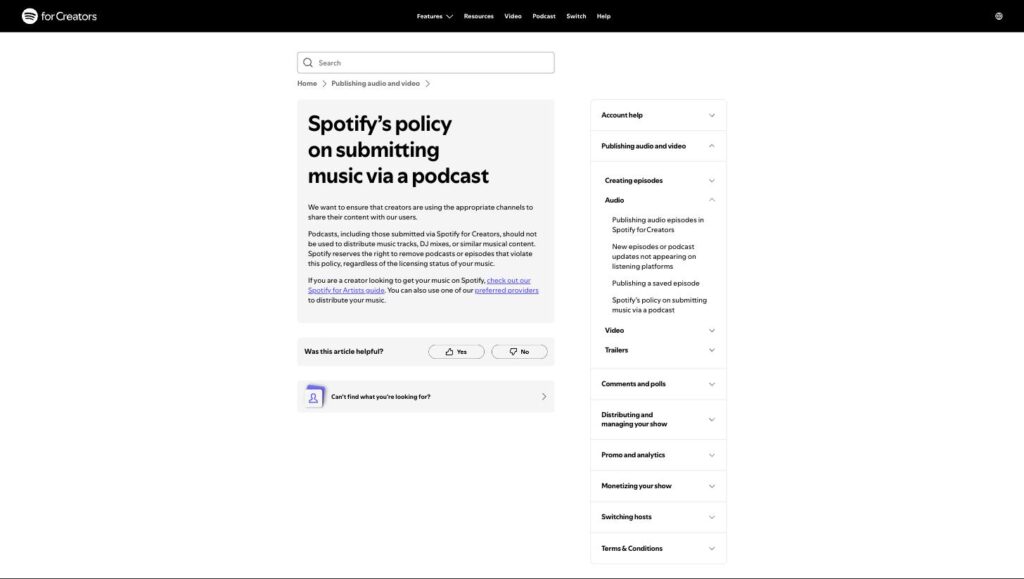
Read that last clause again, so podcasts on Spotify cannot use music tracks… regardless of the licensing status of your music.
I’d already done the work to prepare for the episode, reaching out to every artist or label featured in the mix via Bandcamp before the episode even went up. YouTube’s Content ID system, which is about as thorough as automated copyright detection gets, found nothing wrong with the episode either. None of that mattered, because the takedown was never actually about copyright. It was about channel separation: Spotify sells access to music. A podcast that’s largely music undermines that business model, licensed or not, and the rule exists to protect the model, not the rights holders at all.
The next day, just as the show had been announced as a Finalist in the UK Independent Podcast Awards – the whole podcast, not just the one episode was removed from Spotify. Great.
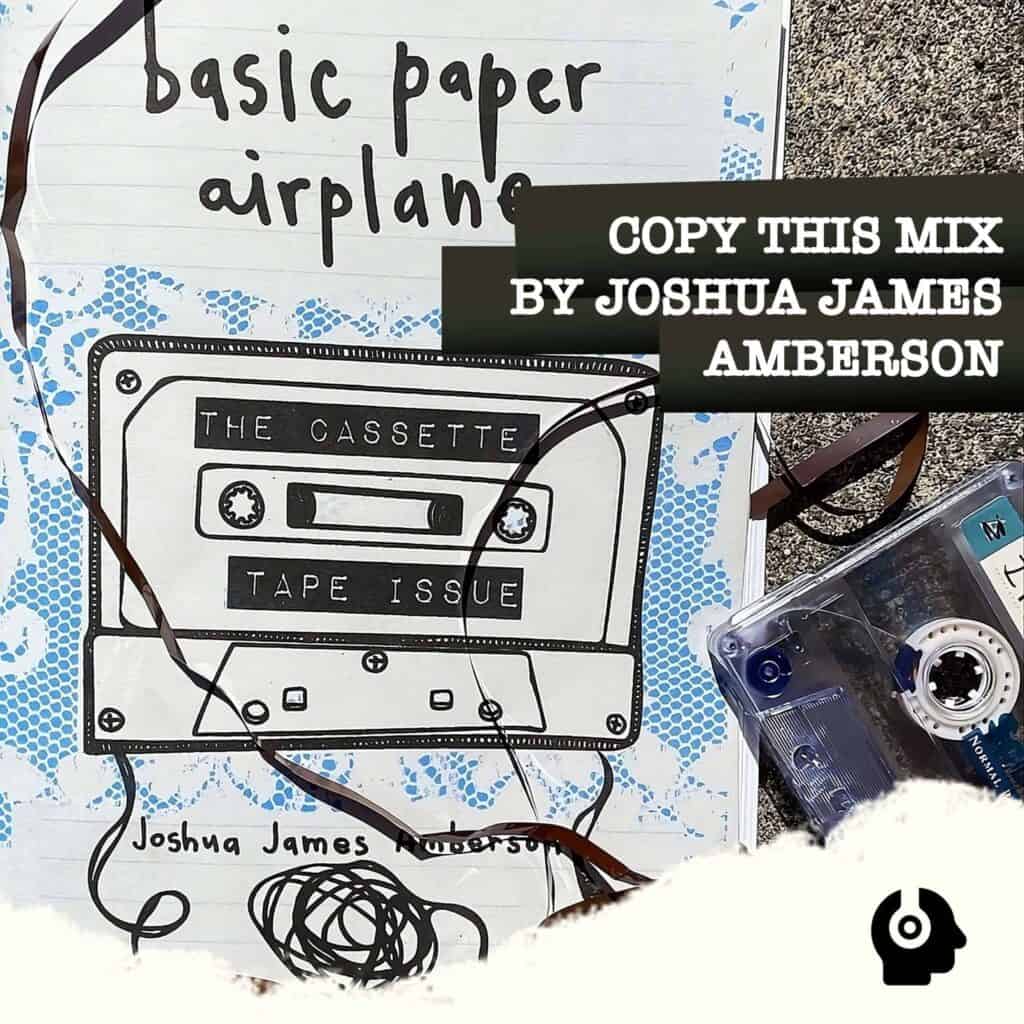
Joshua James wasn’t entirely surprised. For a year or two he’d co-hosted The Steer, a music and writing podcast built around asking guests for a playlist and turning it into a music-only companion episode alongside the regular one, much the same format as the mix he made for us. “When I came on board, I suggested we post those to Spotify,” he told me, “and found out quickly that they didn’t love the format.” What did surprise him was where the pressure came from. “I wouldn’t have imagined that would happen here,” he said, “since it was always major labels or song publishing companies who would issue the complaint.” That’s the assumption most podcasters make, that a takedown like this comes from a rights holder chasing an infringement. It doesn’t. It’s Spotify enforcing its own business rule, with nothing to appeal because it was never about protecting artists rights in the first place.
The Relationship
There’s a bigger pattern underneath this that is worth teasing out. Platforms like Spotify and Apple want to sit between you and your audience, deciding what gets through and on what terms, while contributing almost nothing to the actual reason anyone showed up in the first place. Nobody opens Spotify because they love Spotify. They open it because a show they care about happens to be on it. The content is the draw. The platform is just the pipe, but the pipe gets to switch itself off whenever your content becomes inconvenient for its own business model, and what you get in return is a template letter and a web form that leads you nowhere.
Cassette Culture was off Spotify for about ten weeks, from early August to 22 October 2025, when a new feed went up with the new season launch, and the show was relisted. I can’t tell you exactly where that slice of our audience went in the meantime, possibly to the website, possibly nowhere. But it took 5 months to rebuild to the level of listens we were gaining on that platform before the delisting.
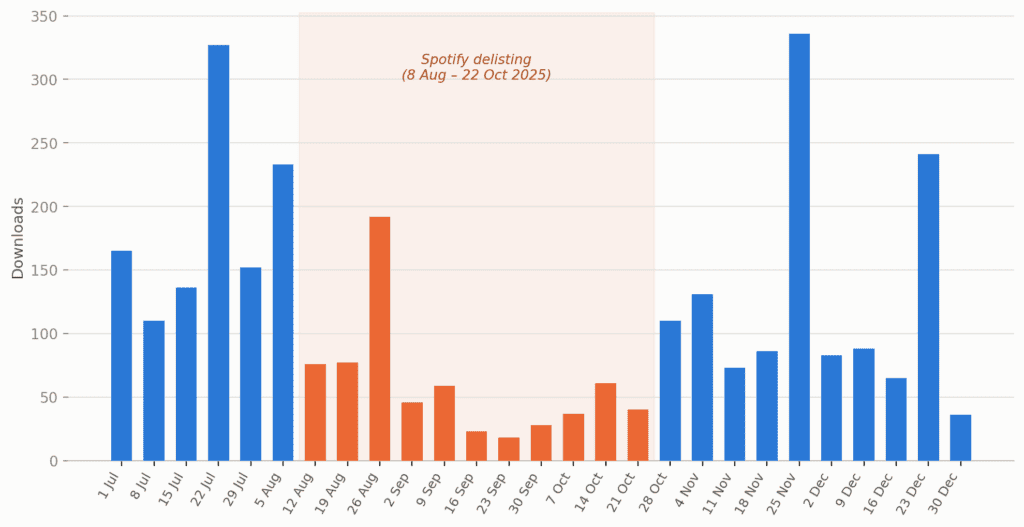
The show’s overall numbers dipped but not disastrously, because no single platform ever carried more than 39% of Cassette Culture’s downloads in the first place. The show had reached audiences across a number of platforms and we worked to engage listeners on YouTube as much as Apple Podcasts, Pocket Casts or Podcast Addict. So losing one for ten weeks was bad but didn’t come close to sinking the show.
Most podcasters never test this, because most podcasters never have to. But it’s worth asking the question before you’re forced to answer it: if one of your main platforms vanished tomorrow, would it actually hurt, or would the rest of your distribution carry the show through?
Platform Bias
There’s a smaller version of this platform bias mistake that shows up on plenty of institutional websites. Walk through a handful of podcast pages and you’ll likely find a Spotify audio player embed sitting on the page. It’s rarely a strategic decision. It’s usually just the app the developer happened to personally favour and know where to grab the embed code from.
The problem is that the actual audience for a lot of institutional podcasts, researchers, industry professionals; people in their 40s and 50s, skews heavily toward Apple Podcasts. The embed and the audience are often two completely different demographics, and nobody in the organisation ever questions an embed code once it’s live.
Both mistakes come from the same root. Platform decisions get made on assumption and personal habit, not on who’s actually listening. The Spotify delisting is the dramatic version of that lesson. The mismatched embed is the everyday version, and it’s one that many institutional podcasters may find on their own website if they go looking.
The fix for both is the same, and it isn’t complicated: Know your audience’s actual platform split before you decide what to embed or how much weight to put on any one app. Distribute everywhere your audience already is, and don’t build your strategy around any single one of them staying put.
Platform diversity isn’t a backup plan you reach for after something goes wrong. It’s how you keep the leverage on your side, because the moment your show depends on one gatekeeper’s business model you don’t actually have any.
Claude.ai was used in writing this blog artlcle, based on real human experience.